

 EN
EN English
 Español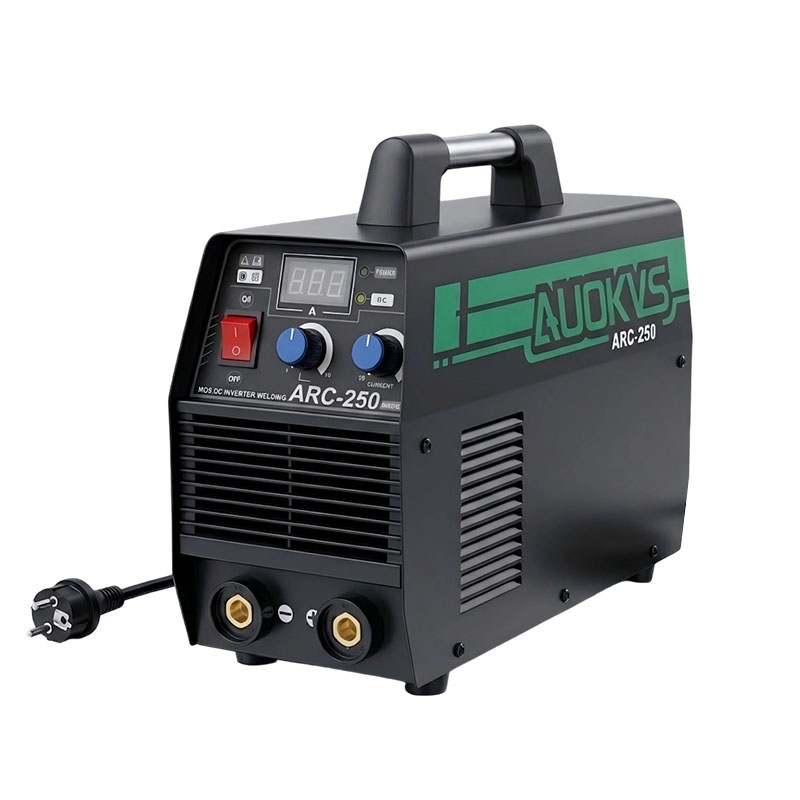


MMA welders, also known as Manual Metal Arc welders or stick welders, represent one of the fundamental categories of welding equipment in the global industry. With an impressive 38% share of the worldwide welder market, their prominence is tied to operational flexibility, cost-effectiveness, and adaptability across diverse environments. Compared to more specialized processes such as TIG or MIG, MMA welding offers the advantage of simplicity in setup and usage, making it accessible to both professionals and hobbyists. Modern models are equipped with IGBT inverter technology, a development that significantly enhances energy efficiency, arc stability, and portability. This innovation positions MMA welders as particularly suitable for intermittent and on-demand work scenarios, where compact design and reliable performance are critical.
Application in Home Repairs
One of the most important areas where MMA welders demonstrate their value is in household and DIY projects. Lightweight designs, often weighing less than 10 kilograms, enable easy handling and transportation, providing non-professional users with access to industrial-grade functionality. Tasks such as repairing wrought iron gates, reinforcing farming tools, or creating small steel structures can be completed with minimal training. The electrode-based system, combined with straightforward controls, lowers the learning curve while still producing durable, high-quality welds. For this reason, MMA welders have become a popular choice in consumer markets, bridging the gap between professional equipment and accessible home-use solutions.
Versatility in Automotive Repairs
The automotive repair industry benefits extensively from the flexibility of MMA welders. With multi-level current adjustment ranging from 20 to 200 amperes, the machines are capable of handling thin sheet metal and thicker structural components within the same workshop. This adaptability eliminates the need for multiple specialized welding units. Thin car body panels, which require precise control to avoid heat distortion, can be welded at low currents. At the same time, higher amperage settings allow secure penetration on frames, exhaust systems, and other load-bearing parts. The compact structure and ease of mobility make MMA welders especially suitable for repair bays where space is limited but task variety is high.
Role in Construction and Heavy Industry
Construction sites present unique demands due to variable power supplies, outdoor conditions, and the need for rugged equipment. MMA welders address these challenges with dual-voltage designs, supporting both 220V and 380V input. This capability ensures compatibility with different electrical infrastructures, making them reliable in both residential and industrial construction projects. Their resilience to dust, wind, and unstable power conditions further enhances their value. For tasks such as welding reinforcement bars, structural beams, or on-site machinery repairs, MMA welders provide the durability and efficiency that contractors require. Their portability ensures workers can move easily between locations, increasing operational productivity on complex job sites.
MMA welders continue to play a central role in the global welding industry by combining simplicity, versatility, and reliability. Their widespread use across home, automotive, and construction applications highlights their adaptability to multiple operational contexts. With the integration of IGBT inverter technology and the growing emphasis on service customization, MMA welders are evolving to meet modern expectations for efficiency, portability, and branding support. As industries pursue cost-effective yet high-performing welding solutions, MMA welders are expected to maintain their guiding position in the market, underpinning both everyday repairs and industrial-scale operations.



