EN
EN English
 Español
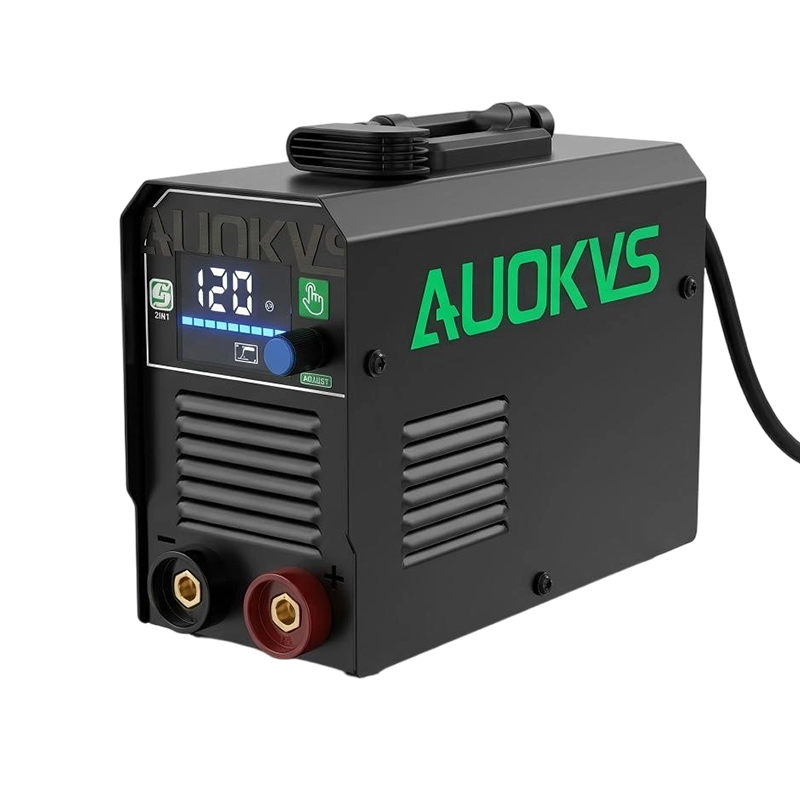
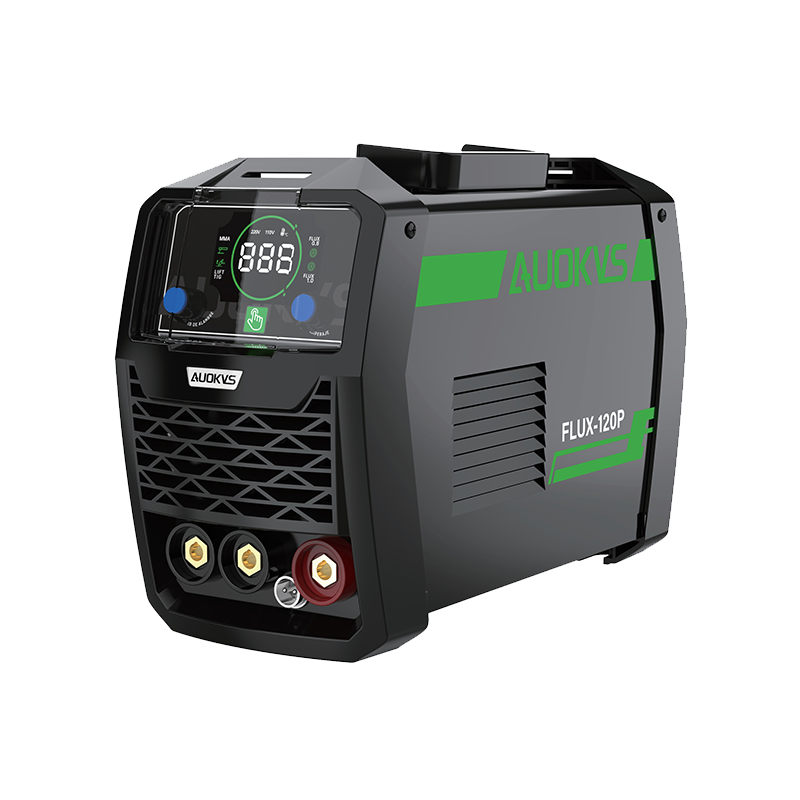
Walk into nearly any metal fabrication workshop, and a particular piece of equipment is likely to catch the eye. Sitting on a wheeled trolley or tucked against a workbench, the MMA DC Welding Machine occupies a space that newer, more technologically advanced welding systems have not entirely claimed. Gas-shielded processes have gained widespread adoption in production environments. Laser and plasma cutting have transformed material preparation. Yet the stick welding machine, in its DC rectifier or inverter form, continues to appear on equipment lists and shop floors with remarkable regularity.
This observation raises a straightforward question. What keeps this comparatively older welding technology in active service, while other methods have been refined and upgraded repeatedly over the decades? The answer is not found in any single feature. Instead, the continued use of this equipment type stems from a combination of operating characteristics, practical economics, and shop-floor realities that newer processes do not always address. Understanding these factors sheds light on why fabrication managers continue to specify this power source alongside more automated or gas-dependent alternatives.
What Makes the Direct Current Arc Suited to Daily Shop Work?
Direct current output offers certain behaviors that align well with the conditions found in typical fabrication bays. When compared to alternating current, the DC arc maintains greater stability across a wider range of electrode types and amperage settings. This stability translates into smoother metal transfer and reduced spatter generation, which becomes particularly valuable when welding out of position—vertical up, overhead, or inclined joints where molten metal behaves less predictably.
The relationship between DC polarity and penetration depth gives the operator meaningful control over weld profile. Electrode negative produces shallower penetration with higher deposition, useful for thin sections or fillet welds on light-gauge material. Electrode positive drives deeper penetration into the base plate, making it suitable for thick sections, root passes, and applications where fusion into the joint root is critical. This polarity choice, available only with DC output, provides a degree of process adjustment that AC machines cannot offer.
Surface condition presents another consideration. Fabrication shops rarely handle perfectly clean, freshly ground material at all times. Rust, mill scale, light oil, and moisture from storage or outdoor handling are common. The manual metal arc process tolerates these surface contaminants to a greater extent than gas-shielded methods, where impurities often cause porosity or lack of fusion. The flux coating on the electrode does more than generate shielding gas; it also acts as a cleansing agent, floating impurities out of the weld pool. For repair work, structural steel erection, and heavy fabrication where surface preparation is limited, this characteristic provides a practical advantage.
Electrode variety further expands the process capability. Different flux formulations—rutile, basic, cellulosic—produce distinct slag systems, mechanical properties, and operating characteristics. Workshop supervisors can select an electrode grade that matches the base material, joint design, and service requirement without changing the power source itself. This flexibility means a single unit handles mild steel, high-strength low-alloy steel, hardfacing deposits, and even some stainless steel grades, simply by switching the consumable.
Why Do Shops Prefer This Equipment Over More Complex Systems?
Simplicity remains one of the strongest arguments for keeping an MMA DC Welding Machine on the shop floor. A manual metal arc welding setup lacks wire feeders, contact tips, gas solenoids, flow meters, and the associated control circuitry that semi-automatic and automatic systems require. Each of those components represents a potential failure point. In dusty, high-traffic fabrication environments, electronics and moving parts experience accelerated wear. The DC stick welder contains comparatively few such elements. Its primary circuit consists of a transformer or inverter, rectifier diodes, control board, and output terminals. That straightforward architecture translates directly into reliability.
| System Component | Manual Metal Arc (DC) | Gas Metal Arc (MIG) | Flux-Cored Arc | TIG (DC) |
|---|---|---|---|---|
| Wire feed mechanism | Not required | Required | Required | Not required |
| Shielding gas supply | Not required | Required | Optional (self-shielded) | Required |
| Contact tip / nozzle | Not required | Required | Required | Not required |
| Polarity switching | Simple (cable change) | Built-in | Built-in | Built-in |
| Control interface | Basic (amperage) | Multiple parameters | Multiple parameters | Multiple parameters |
| Common failure items | Cables, rectifier | Feed motor, gas solenoid | Feed motor, gas solenoid | HF circuit, gas valve |
This reduced component count affects maintenance routines. Troubleshooting a unit that fails to strike an arc involves checking input power, cable connections, electrode holder, and ground clamp. Repairs, when necessary, rarely require specialized diagnostic tools or proprietary parts. Workshop maintenance staff with basic electrical knowledge can often restore service without waiting for external technical support. That independence from specialized service providers carries value in production environments where downtime carries cost.
Durability under rough handling also plays a role. Shop equipment gets moved, bumped, and occasionally dropped. Cables get driven over by forklifts. Power sources sit near grinding stations where abrasive dust settles on every surface. The manual metal arc machine, with its rugged enclosure and straightforward internal layout, withstands these conditions better than systems containing precision wire drives or sensitive electronic gas controls. Many workshop managers have observed that their stick welding units outlast other welding equipment purchased at the same time.
Power supply tolerance adds another practical benefit. Fabrication shops in older industrial buildings sometimes experience voltage fluctuations, especially when heavy equipment starts up or large motors cycle on and off. The DC stick welder handles these variations without significant performance degradation. More importantly, the machine operates effectively from generator power. For workshops that perform off-site work, or for facilities with temporary power arrangements during expansion or renovation, this capability ensures welding continues uninterrupted. Gas-shielded processes, by comparison, depend on consistent gas flow and stable wire feed speed—variables that are harder to control under less-than-ideal power conditions.
How Does Portability Influence the Choice of Welding Power Sources?
Moving welding equipment around a fabrication shop happens more often than many realize. Large structural assemblies and heavy plate components cannot always be brought to a fixed station. The power source must go to the workpiece instead.
Older transformer units weighed a great deal. Moving one across the floor required a trolley, clear pathways, and more than one person. Inverter technology changed this picture. Higher operating frequencies allow smaller transformers and lighter windings. A single worker can now lift and relocate the unit without assistance.
Reduced weight changes daily operations in several ways:
- Workstation mobility – One unit serves multiple bays during a shift, reducing the number of machines needed.
- Storage flexibility – Lighter equipment can be placed on shelves or wall brackets, freeing floor space for material handling.
- Multi-level access – Carrying a unit upstairs becomes practical where heavier machines would need a hoist.
Power input flexibility adds further value. Many portable units accept both single-phase and three-phase supplies without internal modification. Workshops with mixed outlet types benefit from this adaptability. Setup time decreases when any available outlet works.
Off-site work also benefits. Fabrication crews frequently travel to customer locations for installation or repair. Transporting a heavy transformer consumes vehicle payload and requires loading gear. A Portable MMA Welder fits easily into a service truck and runs from a portable generator when mains power is unavailable.
Does the Cost Structure Favor DC Manual Metal Arc Welding?
Workshop managers look at multiple cost factors when selecting equipment. Purchase price matters, but operating expenses, consumable usage, and maintenance intervals also shape the overall picture.
Consumable costs follow a simple pattern:
- Electrodes – Ready to use from the package. No gas cylinder rental, no deposit, no refilling schedule.
- No separate shielding gas – The flux coating provides protection without additional supplies.
- Fewer inventory items – One consumable line instead of gas, wire, tips, and nozzles.
| Cost Factor | Manual Metal Arc (DC) | Gas Metal Arc (MIG) | Flux-Cored Arc | TIG (DC) |
|---|---|---|---|---|
| Filler material | Stick electrode | Wire spool | Wire spool | Filler rod |
| Shielding medium | Flux coating | Gas cylinder | Gas or self-shielded | Gas cylinder |
| Gas rental | Not applicable | Required | Sometimes required | Required |
| Inventory complexity | Low | Moderate | Moderate | Moderate |
Energy consumption varies between processes. A manual arc unit draws power only during active welding. Between beads, during rod changes, and while positioning work, the machine sits idle with negligible draw. Continuous-feed systems often maintain wire preheat and gas pre-flow, keeping energy use elevated even when no welding occurs.
Maintenance costs also favor simpler equipment. No wire feed motors to adjust. No drive rolls to replace. No gas solenoids to fail. When repairs are needed, the parts involved are standard electrical components. Workshop staff can handle many fixes in-house, avoiding service call charges and shipping expenses.
What Role Does Skill Development Play in Keeping This Process Alive?
Welding training programs consistently place manual metal arc at the center of their curriculum. This practice has practical reasons behind it.
The process demands simultaneous control of multiple variables:
- Arc length – Affects voltage and heat input.
- Travel speed – Influences bead shape and penetration.
- Electrode angle – Changes fusion characteristics.
- Rod manipulation – Controls slag coverage and pool behavior.
These demands build hand-eye coordination and process awareness that transfer to other welding methods. A welder who learns on stick electrodes develops observation skills useful across all arc processes.
Different electrode classifications add educational depth:
- Rutile types – Suitable for flat and horizontal work, easy slag removal.
- Basic types – Used for vertical and overhead positions, better mechanical properties.
- Cellulosic types – Provide deep penetration, used for root passes.
Industry certification requirements reinforce the skill set. Many structural and pressure vessel codes mandate manual arc testing. Welders must demonstrate proficiency with stick electrodes in specific positions and joint configurations. This testing ensures that even workshops focused on automated processes maintain manual arc capability for certification and for jobs requiring human judgment.
Can This Technology Coexist With Automated and High-Output Systems?
Automated systems and manual arc equipment serve different purposes in a fabrication shop. They do not compete. They complement each other.
Automation handles repetitive work:
- Long seam welds on consistent joint geometries.
- Production runs where setup time spreads over many parts.
- High-volume orders with standard specifications.
Manual arc covers the remaining work:
- One-off repairs and custom fabrications.
- Awkward joint access where mechanized equipment cannot reach.
- Jobs lacking detailed engineering documentation.
Many workshops maintain a mix of equipment. A robotic cell handles bulk production. Several DC manual stations sit nearby for secondary operations, touch-up work, and non-standard orders. This arrangement allows the shop to accept varied work without adding specialized equipment for every application.
Downtime coverage provides another benefit. When automated systems require maintenance or reprogramming, manual stations continue production. This flexibility keeps work flowing through the shop.
Maintenance and repair within the facility also rely on manual arc. Conveyor frames, structural supports, and material handling fixtures need occasional welding. These tasks are small, awkwardly located, and difficult to schedule on automated systems. A Portable MMA Welder addresses them quickly without disrupting main production.
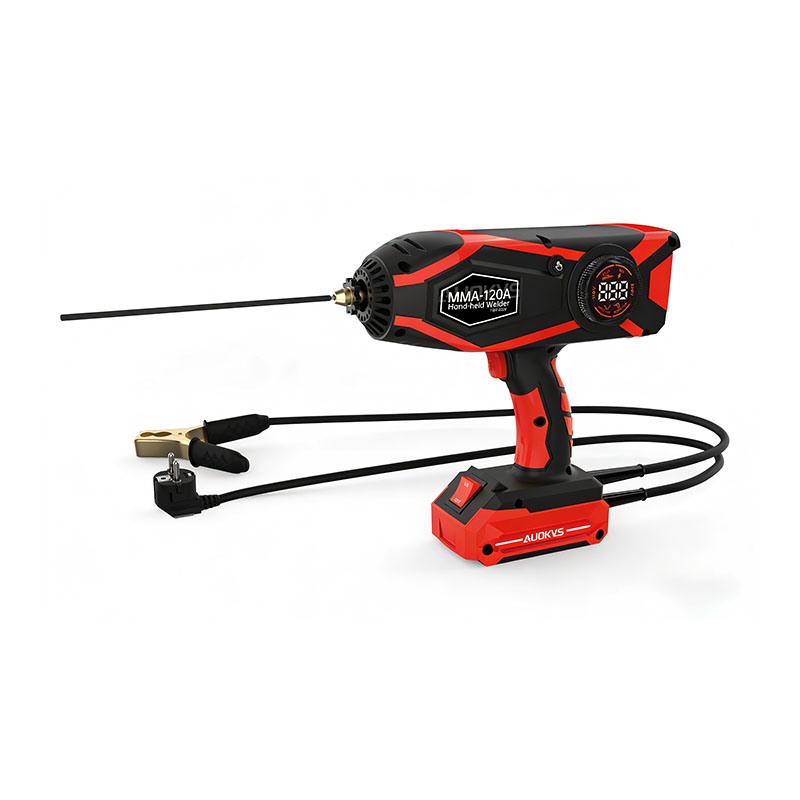
The continued presence of this equipment in fabrication shops rests on practical foundations. The MMA DC Welding Machine operates reliably across varied conditions. The equipment stays simple, durable, and cost-effective. Portability has improved with inverter designs. Workforce training keeps skilled operators available. The manual arc unit handles jobs that automation cannot manage economically. It provides backup when other systems are down. It supports certification and skill development. These functions secure its place alongside newer alternatives, each serving its own role in the workshop.
 Previous