EN
EN English
 Español
Walking onto any active job site, one quickly notices that welding machines are not interchangeable. A unit that performs admirably inside a climate-controlled fabrication shop may become nearly useless when moved to an open construction site. Conversely, equipment that shines during remote pipeline repairs might be overkill—or even counterproductive—in a dedicated production bay. This simple observation leads to a more useful question: rather than asking which machine is "better," it makes more sense to ask under which circumstances a given piece of equipment actually delivers value.
Among the various categories of arc welding power sources, one type has carved out a specific niche based on its physical characteristics and electrical design. The working conditions that favor its use are distinct and measurable. Understanding these conditions helps shop supervisors, field engineers, and maintenance crews make informed decisions without relying on vague marketing claims. The goal is straightforward: match the tool to the task, not the other way around.
Does Mobility Become the Primary Decisive Factor in Outdoor and On-Site Projects?
Construction sites, bridge refurbishment projects, and pipeline laying operations share a common characteristic: workstations move constantly. Steel beams go up, pipe sections get joined, and the welding team follows the progress. In such environments, dragging a heavy, floor-mounted rectifier from one position to another consumes time and energy that could be spent on actual joining work. Lifting bulky equipment onto scaffolding or into trench boxes introduces additional safety concerns.
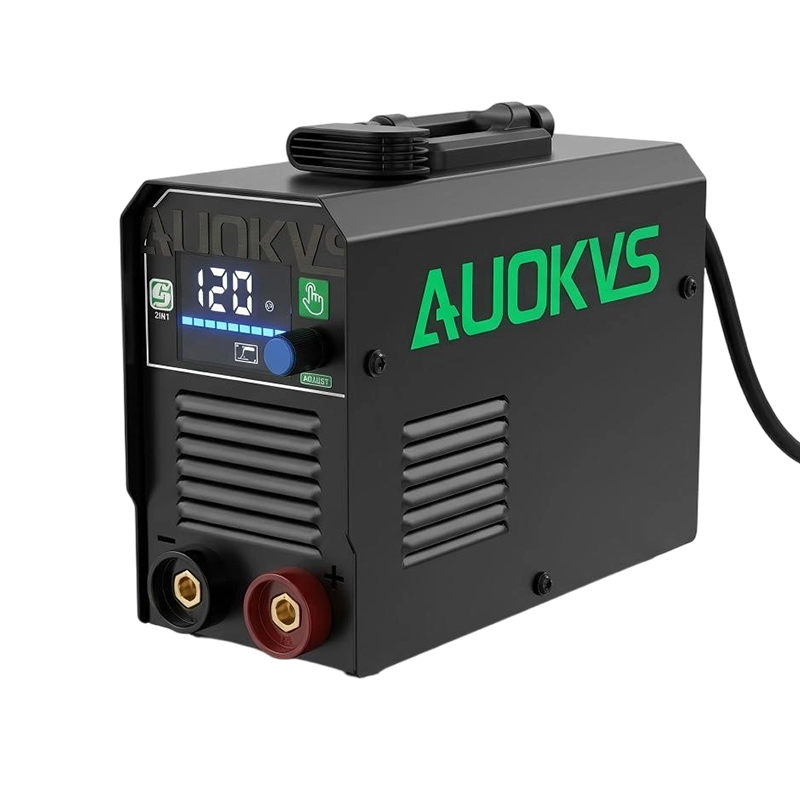
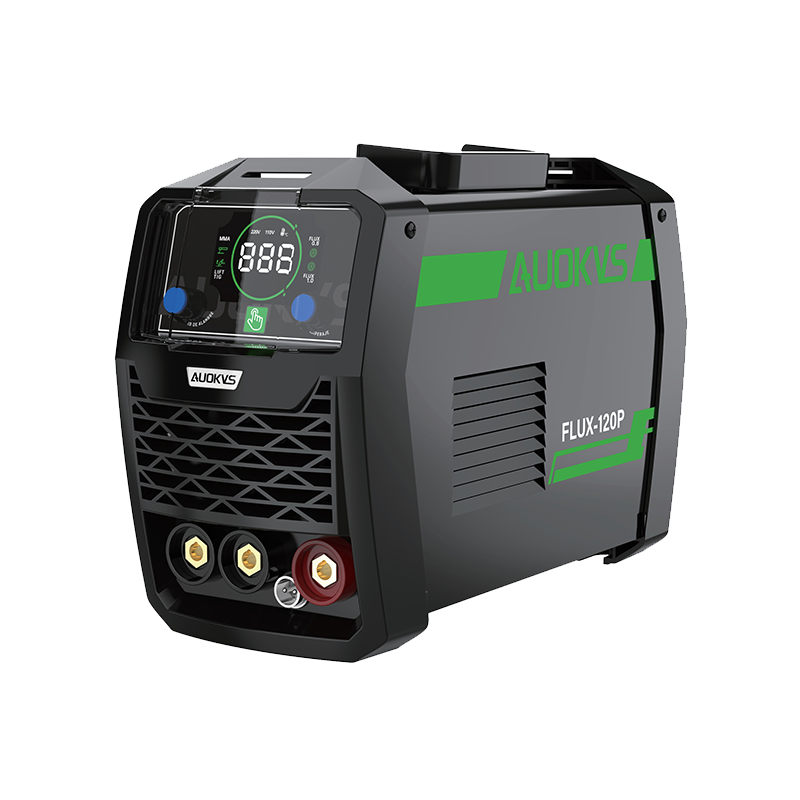
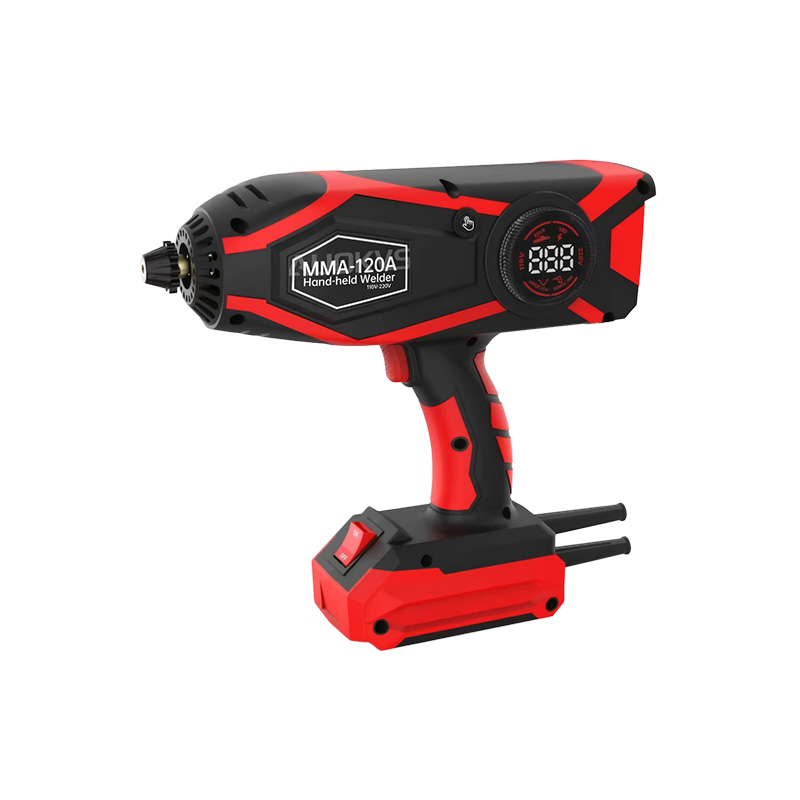
A Portable MMA Welder addresses these physical constraints directly. Its reduced weight and compact footprint allow one worker to carry it up a ladder or across uneven ground without mechanical assistance. Many units include shoulder straps or reinforced carrying handles that further ease transport. Beyond weight, the ability to connect to standard generator sets makes these units viable in locations where mains power has not yet been installed. Voltage fluctuation tolerance, a built-in feature of many contemporary inverter-based designs, ensures that the arc remains stable even when generator output varies with engine speed.
Field crews often report that the practical advantage of such equipment lies not in any single feature, but in the cumulative effect of reduced setup time.
- Less time spent moving equipment means more time available for laying sound beads.
- Jobs that span multiple floors of a high-rise or extend along miles of rural pipeline see this mobility advantage compound daily.
- Reduced physical strain on operators also lowers fatigue-related errors during long shifts.
How Do Emergency Repairs and Maintenance Tasks Favor Quick Deployment?
Unplanned equipment failures demand immediate response. A cracked excavator arm at a mining site, a broken conveyor roller support in a processing plant, or a fractured handrail on a marine vessel—none of these situations allow for leisurely equipment selection. The maintenance crew needs to grab a power source, connect leads, strike an arc, and restore function before production losses accumulate.
In these scenarios, the operational simplicity of a Portable MMA Welder becomes an asset. Unlike gas-shielded processes, manual metal arc welding does not require cylinders, flowmeters, hoses, or pre-flow purge cycles. The operator only needs the machine, electrode holders, ground clamps, and a dry box of consumables. Wind, which disrupts shielding gas coverage, has minimal effect on flux-coated electrodes. Dust and light rain, common nuisances in outdoor breakdowns, do not compromise arc initiation or stability as severely as they might with more sensitive equipment.
The control interface on this type of equipment tends toward minimalism. A current adjustment dial, an on-off switch, and perhaps a hot-start or anti-stick toggle—these few controls reduce the chance of operator error during high-pressure repairs. When a machine is called upon only occasionally for emergency work, a straightforward panel layout helps infrequent users get productive quickly.
- No gas cylinders or hoses to transport, reducing vehicle load and setup time.
- Wind and light moisture have limited effect on arc quality compared to gas-shielded alternatives.
- Minimal controls lower the cognitive load on operators working under time pressure.
What Material Thickness and Joint Configurations Does It Handle Predictably?
Carbon steel and low-alloy structural grades represent the primary materials for which this equipment demonstrates reliable performance. Plate thickness from roughly 3 millimeters up to 20 millimeters falls within a comfortable operating range, provided the operator selects appropriate electrode diameters and sets current accordingly. Thinner sheets, below 2 millimeters, pose a burn-through risk that requires considerable skill to manage. Thicker sections, while technically weldable with proper bevel preparation and multiple passes, demand higher current outputs that some smaller units cannot sustain continuously.
Joint configurations also influence success rates. Flat and horizontal fillet welds proceed smoothly with minimal technique adjustment. Vertical uphill progression, often specified for structural connections, works well with cellulose or rutile electrodes that freeze quickly and support the weld pool. Overhead positions, while more demanding, remain achievable with shorter arc lengths and careful travel speed control.
Open-air conditions, where wind would disperse shielding gas from MIG or TIG torches, do not affect the flux coverage of stick electrodes. This characteristic alone makes the equipment competitive for outdoor structural work, where temporary windbreaks are either impractical or costly to erect. For maintenance crews working along coastlines or on elevated platforms, the elimination of gas bottles also reduces the logistical burden of transporting consumables to remote locations.
- Flat and horizontal fillet welds produce consistent results with routine technique.
- Vertical uphill progression benefits from fast-freezing electrode formulations.
- Overhead welding remains feasible with shorter arc lengths and controlled travel speed.
- Outdoor installations avoid the expense of erecting windbreaks around each joint.
| Jobsite Characteristic | Favorable for This Equipment? | Key Reason |
|---|---|---|
| Frequent position changes | Yes | Light weight allows one-person transport |
| Generator-only power supply | Yes | Inverter design tolerates voltage swings |
| Windy or breezy environment | Yes | Flux coating protects the arc without gas |
| Confined access (scaffolds, manholes) | Yes | Compact dimensions fit tight spaces |
| Continuous high-current welding | No | Duty cycle limits sustained output |
| Thin-gauge sheet metal (under 2 mm) | No | Risk of burn-through is elevated |
| High-humidity or salt spray | Caution | Electrical components need protection |
| Non-ferrous materials (aluminum, copper) | No | Consumable compatibility is lacking |
Does Operator Skill Level Influence the Choice of This Equipment?
Manual metal arc welding calls for a reasonable level of hand-eye coordination and arc control that differs from one person to another. Getting the electrode to strike cleanly against the base metal, holding a steady gap between rod tip and workpiece, and adjusting the angle as the joint changes shape—each of these steps takes repeated practice before they feel natural. Some individuals pick up these motions in a matter of days, while others spend weeks working through poor starts, stuck rods, and uneven bead profiles before things start to click.
Training shops frequently keep this type of machine around because it strips away all the extra gadgets and lets learners focus on what actually matters. No wire feeders to set up, no gas nozzles to aim, no synergic lines to program. Just the rod, the arc, and the puddle. Watching that molten pool dance around and learning how to steer it along a joint gives new welders a foundation that carries over into every other process they might pick up later. The habits formed here—steady hands, patient travel, reading the puddle's behavior—stay with a person for years.
Seasoned hands find value in the same machine for different reasons. The arc burns with a certain steadiness once the rod settles into its working length, and that predictability lets an operator concentrate on filling the joint properly rather than fighting the equipment. Some units come with a little extra boost at the start to get the arc going without fuss, and a circuit that breaks the weld if the rod sticks too long saves a few minutes of chipping and grinding here and there.
- Sticking the rod and striking the arc over and over again teaches motor control that carries over to other welding methods.
- Reading the puddle and adjusting travel pace on the fly becomes second nature through repeated use.
- Old hands like the consistent arc feel once the rod burns down to its normal operating zone.
- That anti-stick feature keeps accidental freezes from turning into half-hour repair jobs.
How often someone uses the machine also plays into whether it fits their situation. In settings where welding happens once every few weeks, nobody wants to spend twenty minutes recalibrating knobs or checking wire spool tension every time the unit gets pulled out. Machines that keep their settings and respond the same way each time they turn on reduce the gap between walking over and striking an arc.
Under Which Environmental or Process Conditions Should It Be Avoided?
No single welding machine covers everything, and pretending otherwise leads to wasted time and bad welds. Knowing where to draw the line saves people from chasing problems that never should have come up in the first place.
Wet, sticky air causes real trouble for stick welding. Electrodes soak up moisture from the atmosphere, and that water turns into hydrogen inside the weld deposit. Hydrogen finds its way into tiny cracks and makes them grow under stress. Rod ovens and heated quivers help keep consumables dry, but out in the field, those things do not always get used properly. Near the ocean, salt spray does its own kind of damage by eating away at terminals, plugs, and the boards inside the case. Unless the unit carries a proper weatherproof rating, coastal work tends to shorten its life noticeably.
Some materials simply do not belong anywhere near a stick rod. Aluminum and copper act completely differently under the arc—they conduct heat away too fast, they do not form the right kind of slag, and the rods meant for steel just make a crumbly mess on top. High-strength alloy steels present a different kind of headache. They need careful preheating and controlled cooling between passes to avoid cracking, and many small units simply cannot hold the heat output long enough or steady enough to meet those requirements.
Assembly lines that run all day long push little machines past their limits. Air-cooled units shed heat only so fast, and once they hit their thermal cutoff, they shut down until they cool off. That pattern of run, stop, wait, run again does not work on a production floor where every minute of downtime costs money. Water-cooled systems with bigger radiators handle that kind of continuous pounding without breaking a sweat.
- Moisture in the air turns electrode coatings into a source of hydrogen, and hydrogen cracks welds.
- Salt air corrodes connectors and circuit boards faster than dry inland conditions.
- Aluminum and copper need alternating current or entirely different rod compositions.
- Hardened steels demand sustained heat input that smaller units struggle to provide.
- Running a unit at full output hour after hour trips the thermal protection repeatedly.
Dust and grit find their way into cooling fans and settle on internal components. Quarries, grain elevators, and similar places fill the air with fine particles that coat everything. A machine that works perfectly in a clean shop might start acting up after a week in those conditions. Putting the power source in a separate clean area and running long leads to the work often makes more sense than dragging the unit right into the dusty zone.
Is the True Measure of This Equipment Found in the Jobsite Reality?
Going back to where this discussion started, the real worth of any welding machine shows up when it matches the circumstances at hand. A Portable MMA Welder fits certain jobs nicely—outdoor sites, moving between locations, quick fixes where hauling gas cylinders becomes impractical, carbon steel work that does not involve extreme thicknesses. The same unit starts showing weaknesses when someone asks it to run all day in a humid coastal area or weld thin aluminum sheets.
Supervisors and crew leaders get the value out of this gear when they take a few minutes to look at the upcoming job before dragging anything out of the truck. What kind of power is available on site? Does the crew have to climb stairs or ladders to reach the work? How thick is the material, and what grade? Who will run the beads, and how recent is their stick welding experience? Running through those questions takes almost no time and prevents plenty of headaches.
Welding technology moves forward every year with better inverters and smarter control boards, but that basic principle—matching the machine to the moment—has not changed in decades. People who keep that rule in mind turn out better work, waste less material, and spend fewer hours fixing mistakes. The portable unit earns its keep not by claiming to do everything, but by doing certain things well and staying out of situations where it does not belong.
- Taking a minute to check power availability and access before starting saves trouble later.
- Matching the process to material thickness and alloy type should happen before anyone strikes an arc.
- Recognizing what a machine cannot do matters just as much as knowing what it can do.
- Jobsite conditions teach lessons that spec sheets never capture.
Carrying a variety of power sources gives a crew flexibility. When a job comes along with outdoor conditions, occasional welding, carbon steel, and a mixed group of operators, the portable unit fits the bill. When the next job involves thick plate, continuous runs, or copper alloys, something heavier and more specialized takes over. That kind of balanced inventory prevents anyone from trying to force a round peg into a square hole, and each weld gets the process that actually suits the work.
 Previous